


Every new year is an invitation to new adventures. So where should you go in 2026? We've polled the Parks Channel community and selected some lesser-known, can't-miss options for each region of the country. Here are a selection of places that will stay with you long after you leave, recommended by those who know them best.
West Coast
WASHINGTON
MOUNT RAINIER. Olympic might get more attention, but Mount Rainier holds the distinction of being the fifth national park in the United States and the first in the Pacific Northwest. It was established on March 2, 1899. The 14,411-foot mountain was named for an obscure British admiral. Better would have been Tahoma or Tacoma, the indigenous Puyallup and Nisqually names for it, meaning “the source of nourishment from the many streams.” Along with the ever-popular Paradise and Sunrise, check out:
• Spray Park – a trail bursting with wildflowers in spring.
• Tolmie Peak Fire Lookout – breathtaking views of the mountain.
• Gobblers Knob Fire Lookout – an excellent sunrise or sunset spot for photography.
PALOUSE FALLS STATE PARK. In southeastern Washington, this small park packs a punch in the form of a spectacular 198-foot waterfall, the legacy of cataclysmic events from the Ice Age 13,000-15,000 years ago. It’s part of the Ice Age National Geologic Trail. With minimal light pollution, Palouse Falls is an incredible spot for stargazing. Bring a telescope or simply lie back and enjoy the Milky Way on a clear night.
NORTH CASCADES. In 2024 the Wall Street Journal named it the second-best national park in the United States, citing its relatively low visitation and glorious landscapes. It’s a favorite of the back-country crowd but don’t feel you have to be hardy to explore it. For a sample itinerary and some must-see stops, check out this post from Beyond the Bucketlist.
Watch Alice Ford’s solo three-day hike through North Cascades National Park.
View this post on Instagram
LIME KILN POINT STATE PARK. One of the best land-based whale-watching spots in the world. Known locally as “Whale Watch Park,” this 42-acre gem offers breathtaking views of the Salish Sea. And the best part is, you can spot whales without setting foot on a boat. The park’s rocky shoreline provides prime viewing of southern resident orcas, which are often seen feeding and socializing in the waters just offshore. Gray whales, humpback whales and minke whales also make appearances, especially during migration seasons. In the spring, just as the whales arrive, so do the wildflowers on shore. Summer is the best and most popular time to go whale watching though. Be sure to arrive early to secure parking.
OREGON
DESCHUTES NATIONAL FOREST. A sprawling outdoor playground that covers over 1.6 million acres of diverse landscapes. From towering volcanic peaks to serene alpine lakes and dense pine forests, this natural wonderland offers endless opportunities for adventure. Top destinations:
• Newberry National Volcanic Monument: This unique area showcases the volcanic origins of the region. Visit Lava Butte for stunning vistas, explore the mile-long Lava River Cave, or hike around the massive Newberry Caldera, home to sparkling Paulina Lake and East Lake. Don’t miss the dramatic Paulina Falls, a picturesque double waterfall.
• Tumalo Falls: Just a short drive from Bend, Tumalo Falls is one of the most iconic waterfalls in Oregon. A short hike leads to a viewpoint, while longer trails take you deeper into the lush Deschutes backcountry.
• Cascade Lakes Scenic Byway: This 66-mile route winds through pristine forests and offers access to numerous alpine lakes, including Sparks Lake, Devils Lake, and Elk Lake. These are ideal spots for kayaking, paddleboarding, and fishing, with breathtaking views of nearby peaks like South Sister and Broken Top.
View this post on Instagram
HONEYMAN MEMORIAL STATE PARK. A local favorite known for its iconic sand dunes, tranquil lakes, and dense coastal forests, this 2,000-acre state park provides a perfect base for those looking to explore the magic of Oregon’s coast. Part of the Oregon Dunes National Recreation Area, this vast expanse of shifting, golden sand stretches for miles, and features the state’s second-largest campground. Along with dune hiking you can go sandboarding and sledding, or kayak in the pristine waters of Sutton Lake. In the spring be on the lookout for pink rhododendrons.
BLUE POOL AND TAMOLICH FALLS. A scenic 6.6-mile hike leading to one of Oregon’s most enchanting spots. The pool gets its stunning blue color from the underground springs that feed it, which have filtered through lava rock for centuries. The result is water that’s as clear as glass, with hues of blue and turquoise that seem to glow under the sun. The best time to visit is during the warmer months, typically between May and September, when the McKenzie River Trail is clear of snow and the weather is ideal for hiking. However, it’s important to note that the pool is extremely cold, even in the summer, and is not recommended for swimming, despite its inviting appearance.
CALIFORNIA
SEQUOIA & KINGS CANYON. Not to be bleak about it, but in an era of devastating wildfires, it feels like we should marvel at our tree companions while we can! Sequoia is a breathtaking reminder of nature’s grandeur, home to the some of the largest and oldest living organisms on Earth.
These ancient trees have stood for thousands of years, their thick, fire-resistant bark allowing them to survive and even thrive in the face of natural fires. However, as the 2020 burning of Big Basin Redwoods State Park showed, these majestic giants are threatened like never before.
Visiting the park in 2025 offers a chance to witness and appreciate these towering wonders while supporting preservation efforts to protect them for future generations. The iconic General Sherman Tree, over 2,200 years old, is still standing strong, but its survival depends on ongoing conservation. Late spring through early fall is the best time to experience the park’s beauty, with clear trails and optimal weather.
MOUNT TAMALPAIS STATE PARK. An easy drive north of San Francisco, this is an amazing destination for hiking and wildlife viewing. Known as the “crown jewel” of the Bay Area, “Mount Tam” offers sweeping views of the Pacific Ocean, San Francisco Bay, and the rugged coastal hills. In 2025, visitors can look forward to renewed trails, seasonal wildflower displays, and clear skies perfect for stargazing. The intrepid will no doubt want to trek the famous 14-mile out-and-back Dipsea Trail to Stinson Beach, but the less adventurous can simply enjoy a scenic picnic at the summit, or explore redwood groves and waterfalls. Mount Tam delivers experiences for all ages and abilities. There’s first-come, first served camping at two campgrounds.
View this post on Instagram
ANTELOPE VALLEY CALIFORNIA POPPY RESERVE. Did you know that the state flower is the California Poppy? We didn’t either, but wildflower fans will definitely want to check out this state reserve from mid-February through May to witness “a mosaic of color that changes daily.” California State Parks also offers a helpful trail map showing levels of difficulty. Just please keep to the trails! Flower trampling is strictly prohibited.
NEVADA
VALLEY OF FIRE STATE PARK. Located just an hour from Las Vegas, this is a stunning desert landscape renowned for its fiery red sandstone formations, ancient petroglyphs, and breathtaking vistas. It was a stand-in for Mars in Arnold Schwarzenegger’s classic movie “Total Recall,” and even Elvis left the building to film shots there for “Viva Las Vegas.”
View this post on Instagram
The park’s otherworldly terrain, shaped over 150 million years, offers visitors a chance to step into a world of vibrant colors, rugged beauty, and rich history. The Fire Wave Trail is a must-hike destination for anyone captivated by the beauty of the desert. This short, 1.5-mile round-trip trail leads you through stunning landscapes of red sandstone, pastel swirls, and dramatic rock formations that resemble waves frozen in time. The unique geology creates a vibrant tapestry of colors, especially during sunrise or sunset when the rocks seem to glow. Accessible and relatively easy, the trail is perfect for casual hikers and photographers, offering incredible opportunities to marvel at the surreal scenery. Whether you’re drawn to its natural artistry or the serene desert ambiance, the Fire Wave Trail provides an unforgettable experience highlighting the American Southwest’s unique beauty.
SPRING MOUNTAIN RANCH STATE PARK. Just a short drive from the Las Vegas Strip, Spring Mountain Ranch State Park offers a refreshing escape into Nevada’s high desert serenity. Right next to Red Rock Canyon National Conservation Area, this former working ranch once belonged to eccentric billionaire and Hollywood mogul Howard Hughes. It features some of the oldest buildings in the state, including an 1860s-era blacksmith shop. Visitors can explore the historic ranch house, stroll through lush meadows and orchards, and join guided tours that detail the park’s colorful history. Summer visitors can enjoy a variety of outdoor shows in the Super Summer Theatre. Flex tickets sell out fast though!
Midwest
MISSOURI AND KANSAS
FREEDOM’S FRONTIER NATIONAL HERITAGE AREA. Never heard of an NHA? Neither had we until we started the Parks Channel. A National Heritage Area is more than a collection of historic sites—it’s a dynamic region where the past and present converge. To date there are 62 of them. Freedom’s Frontier spans parts of Kansas and Missouri, telling the story of a divided nation and the resilience of its people. It’s where fiery debates over slavery sparked a civil war, where brave pioneers forged new paths, and where civil rights battles changed the course of history. This isn’t just about dates and dusty artifacts; it’s about standing where history happened, walking in the footsteps of change-makers, and connecting with stories that still resonate today. Highlights:
Fort Scott National Historic Site: Travel back to the 1840s at this meticulously preserved frontier fort and learn how Fort Scott became a flashpoint in the fight over slavery.
Brown v. Board of Education National Historical Park: Stand in the very building where history turned a corner. The Monroe Elementary School in Topeka, Kansas, is a powerful reminder of the Supreme Court decision that ended segregation in public schools.
John Brown Museum State Historic Site: Dive into the life of John Brown, the abolitionist who refused to back down. His passionate fight against slavery helped set the stage for the Civil War.
Black Jack Battlefield and Nature Park: Walk the fields where the first armed clash over slavery took place in 1856. The serene landscape belies the fierce struggle that unfolded here, marking a turning point in the nation’s history.
Mahaffie Stagecoach Stop & Farm Historic Site: Take a family-friendly trip into 19th-century life with hands-on activities, stagecoach rides, and a glimpse of what life was like on the historic Santa Fe Trail.
View this post on Instagram
INDIANA
INDIANA DUNES NATIONAL PARK. Hitting the beach in Indiana? You bet! This is a hidden gem that offers a perfect blend of natural beauty, outdoor recreation, and accessibility. Spanning 15 miles of Indiana coastline along the southern shore of Lake Michigan and encompassing 15,000 acres of diverse landscapes, this park is a haven for nature lovers and adventurers alike. Check out our Top 10 Things to Do there and videos from Parks Channel creators Trekers, Megatherium Club and the Center for Environmental Filmmaking at American University.
View this post on Instagram
WISCONSIN
ICE AGE NATIONAL SCENIC TRAIL. Officially designated a national park unit in December 2023, this trail stretches 1,200 miles across the state, celebrating its remarkable glacial history while honoring the ancestral lands of 15 Tribes. A collaborative effort supported by passionate volunteers, the Ice Age Trail Alliance, the Wisconsin Department of Natural Resources, local partners, and the National Park Service, it’s a must-do journey for hikers, history enthusiasts, and nature lovers. Some advice for the trip:
• Stay in Madison and Explore Madison’s Outdoor Scene: Madison offers great access to trailheads including the Capital City Trail and the Badger State Trail.
• Start at Devil’s Lake State Park. Just an hour from Madison, Devil’s Lake State Park offers one of the trail’s most scenic sections of the Ice Age Trail. Known for its stunning cliffs and crystal-clear waters, it’s the perfect introduction to Wisconsin’s glacial landscapes.
• Learn About Trailblazers Like Emily Ford. Check out the Outside film about Emily Ford, the first Black woman to thru-hike the trail in winter. Her story of perseverance and connection to nature is truly inspiring.
• Stop at Ski Hi Fruit Farm. Located near the trail, this charming women-owned spot is famous for its hard cider—highly recommended for a refreshing post-hike treat.
• Take a Detour to The House on the Rock. The House on the Rock is a mind-bending experience showcasing the creative vision of architect and designer Alex Jordan. It’s an unforgettable all-day adventure through fantastical rooms and exhibits.
MISSOURI
MARK TWAIN NATIONAL FOREST. Spread across the lush Ozark Highlands of Missouri, Mark Twain National Forest pays tribute to one of America’s most beloved authors. Named after Mark Twain — pen name of Samuel Langhorne Clemens, a Missouri native who forever captured the spirit of the Mississippi River in his stories — this forest stands as a testament to both the state’s literary heritage and its breathtaking natural beauty. In spring and summer, visitors can enjoy a wide range of outdoor activities. There are over 750 miles of trails for hiking and biking, and 350 miles of streams for those who’d rather paddle a kayak or canoe. Abundant campsites and picnic areas make it easy to savor the warm weather in peaceful, leafy surroundings.
NORTH DAKOTA
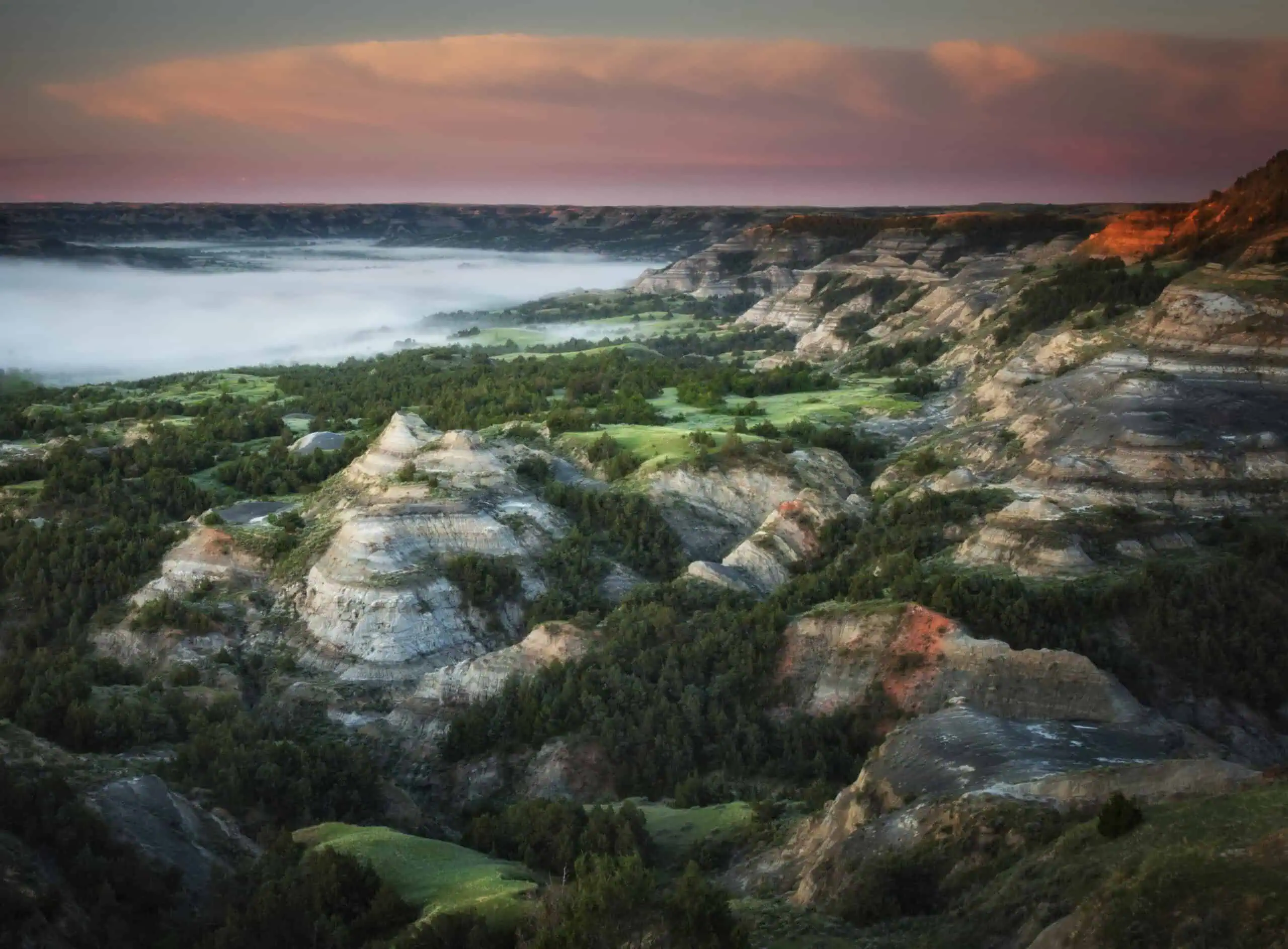
THEODORE ROOSEVELT NATIONAL PARK. Our 26th president might well have blurted “bully!” at the astonishing natural riches of the park that now carries his name. Here, North Dakota’s colorful badlands meet rolling prairies and bison herds roam freely. Park Ranger Peelee caught some of Teddy’s exuberance – he often goes viral on Instagram. Check out this video from We’re in the Rockies.
Hiking & Backpacking: Explore trails like the Wind Canyon Trail or the Caprock Coulee Trail for sweeping canyon overlooks.
Ranger Programs: Join guided walks or campfire talks to learn about the park’s history, geology, and ecology.
Stargazing: Crystal-clear night skies are dreamy.
Where to stay: Medora is fun. Dickinson has MUCH cheaper hotels.
East Coast
From the cascading highlands of Vermont to the nation’s newest national park in West Virginia, the views from the East are hard to beat. Throw in a dose of history with some of the nation’s most famous landmarks and it’s easy to see why some of America’s greatest treasures can be found here. This is a list of places that are somewhat off the beaten path, but which still offer great experiences in nature. Now would also be a good time to go see the role Boston played in the American Revolution, as our big 250th birthday celebration kicks off in 2026.
MASSACHUSETTS
FREEDOM TRAIL – BOSTON. The Freedom Trail in Boston is a great reason to head to Beantown. In under an hour you could hike this 2.5-mile time machine, but you’ll want to spend as much time as you can soaking up the 18th century. You’ll walk through 16 historic sites, from Boston Common to Bunker Hill, and discover stories that textbooks can’t capture. What’s cool and unexpected? The charming architecture, vibrant neighborhoods, and the chance to see Boston from a whole new angle. Plus, it’s a fun way to get your steps in while soaking up some revolutionary history.
View this post on Instagram
Highlights:
1. Boston Common: The starting point and the oldest public park in the United States.
2. Massachusetts State House: Known for its iconic golden dome.
3. Park Street Church: A historic church with significant ties to the abolitionist movement.
4. Granary Burying Ground: The final resting place of notable figures like Paul Revere, Samuel Adams and John Hancock.
5. King’s Chapel and Burying Ground: A historic church and cemetery.
6. Old South Meeting House: Famous for its role in the Boston Tea Party.
7. Old State House: One of the oldest public buildings in the United States.
8. Faneuil Hall: Known as the “Cradle of Liberty,” it was a meeting place for revolutionaries.
9. Paul Revere House: The colonial home of American patriot Paul Revere.
10. Old North Church: Famous for the “One if by land, two if by sea” signal.
11. Copp’s Hill Burying Ground: Another historic cemetery.
12. USS Constitution: The world’s oldest commissioned naval vessel still afloat.
13. Bunker Hill Monument: Commemorates the Battle of Bunker Hill.
VERMONT
CAMEL’S HUMP. Vermont’s third-highest peak, at 4,083 feet, is a striking natural landmark with the distinctive double-humped silhouette that inspired its name. Early settlers likened the mountain’s shape to a camel’s back, and the name stuck. Interestingly, Samuel de Champlain’s 17th-century maps referred to it as “Le Lion Couchant” (The Resting Lion), emphasizing its dramatic profile.
Camel’s Hump offers a variety of hiking trails, including the challenging Long Trail, which traverses its summit. The peak rewards hikers with panoramic views of the Green Mountains, Lake Champlain, and the Adirondacks. The best time to visit is during late summer and early fall (August to October), when the weather is mild, and Vermont’s famous foliage creates a breathtaking backdrop. Spring and early summer are also lovely, though trails can be muddy from snowmelt. Always check local trail conditions and prepare for unpredictable mountain weather when planning your trip.
WEST VIRGINIA
NEW RIVER GORGE. America’s 63rd national park – designated as such in 2020 – is a breathtaking destination known for its rugged beauty and rich history. Despite its name, the New River is one of the oldest rivers in the world, estimated to be 3 million years old. Its powerful currents carved the gorge’s dramatic cliffs and steep valleys, creating a paradise for adventurers and nature lovers alike.
The area’s history is deeply tied to coal mining. During the 19th and early 20th centuries, the gorge was a bustling hub of activity, with mining towns springing up along the river. Today, remnants of this era, such as abandoned mines and railroads, can still be explored, offering a glimpse into the lives of the miners who once worked here. One of the park’s most iconic features is the New River Gorge Bridge, completed in 1977. Spanning 3,030 feet, it’s one of the longest steel single-span arch bridges in the world and serves as the centerpiece of the annual Bridge Day festival, where BASE jumping and rappelling enthusiasts gather.
Visitors to the park can enjoy a variety of activities, including world-class whitewater rafting, rock climbing, hiking, and mountain biking. The New River Gorge is also a haven for wildlife watchers and photographers, with its diverse ecosystems supporting everything from peregrine falcons to black bears. For those seeking a more relaxed experience, scenic drives and picnics along the river provide serene opportunities to take in the gorge’s stunning landscapes.
The best times to visit are spring and fall when the weather is mild, and the park’s vibrant wildflowers or autumn foliage are on full display.
View this post on Instagram
NEW YORK
ADIRONDACK STATE PARK. The biggest, baddest park you’ve never heard of! Located in northern New York, this is the largest publicly protected area in the contiguous United States, sprawling over 6 million acres. It’s a unique mix of public and private land, governed by strict environmental protections that preserve its wilderness character. Unlike traditional state parks, it encompasses entire towns, lakes and forests, making it a mosaic of natural beauty and human history.
The park was established in 1892 to protect the Adirondack Mountains and their watersheds, partly in response to concerns about deforestation and water supply for New York City. It became a symbol of the conservation movement, with the state constitution designating the land as “forever wild.” One historical anecdote highlights the park’s cultural legacy: in the late 19th century, it became a retreat for wealthy industrialists who built extravagant “Great Camps” along its pristine lakes. These camps, including those of the Vanderbilt and Rockefeller families, still stand as examples of rustic luxury architecture.
Visitors can enjoy a wide variety of activities throughout the park. Hiking enthusiasts can explore over 2,000 miles of trails, including the challenging Adirondack High Peaks, with 46 summits over 4,000 feet. Water lovers can paddle or fish in the park’s 3,000 lakes and ponds and 30,000 miles of rivers and streams. In the winter, the park transforms into a haven for skiing, snowshoeing, and snowmobiling. For those interested in history and culture, museums like the Adirondack Experience provide insight into the area’s natural and human history.
The South
The South abounds in wild experiences, from the swamps of the Everglades to the desert Texas ranchlands of the Rio Grande. If you like tall waterfalls, primeval swamps, wild rivers or floating on a sea, there’s a waterborne experience just waiting for you. Most of these parks are within easy driving distance of a major airport, if you don’t count the short 300 mile drive in Texas to Big Bend State Park. Best of all, these parks see only a fraction of the visitors that big western parks see, so you won’t have to wait in line just to get in. A great perk is southern cuisine—whether seafood, barbecue, or seasonal produce—it’s something best sampled at the source.
TENNESSEE
FALL CREEK FALLS STATE PARK. It’s popular with locals, but this gem gets nowhere near the 13+ million visitors who piled into the Great Smokies last year. Located on the scenic Cumberland Plateau, Fall Creek Falls State Park takes its name from its spectacular 256-foot waterfall — one of the tallest in the eastern United States. During the 1930s, New Deal-era workers from the Civilian Conservation Corps helped develop the park’s early trails and facilities, leaving a legacy of craftsmanship that visitors still enjoy today.
Things to Do:
Hiking & Biking: The park boasts over 56 miles of hiking trails, ranging from short, kid-friendly loops to more challenging backcountry treks.
Rock Climbing: Copperhead Rock and Buzzards Roost are popular destinations for all levels of climbers. Be sure to register in advance.
Fishing & Boating: Paddleboats, kayaks and canoes are available to rent from April through October.
Camping & Cabins: There are 202 campsites with water and electric hookups. The park also offers two- and three-bedroom cabins.
Nature & Adventure Programs: Ranger-led activities include programs on geology, astronomy, forest ecology and orienteering. You can request a program here.
View this post on Instagram
FLORIDA
THE EVERGLADES. America’s biggest swamp. A sea of grass draining into the Gulf of Mexico, a subtropical wilderness the size of Los Angeles. It’s a paradise for wildlife enthusiasts with opportunities to see alligators, manatees and a variety of bird species. Sawgrass marshes and hardwood hammocks give way to mangrove forests along the coast. It’s one of the most unique ecosystems in the US, and this is not really a hiking trip – it’s best experienced in a boat. Just when you think you’ve seen it all, the Everglades can surprise you with a rare bird, a dangerous reptile or a massive fish. Check out the videos on our Everglades National Park page.
View this post on Instagram
TEXAS
BIG BEND RANCH STATE PARK. Big Bend Ranch State Park in Texas is a massive adventure waiting to be discovered. Spanning over 300,000 acres, it’s the largest state park in Texas. The state park gets less than 3% of the visitors of its big brother, Big Bend National Park, and offers the same dark skies and quality outdoor adventures. You can hike, mountain bike, and horseback ride to your heart’s content. The park’s rugged canyons, scenic vistas, and the Rio Grande offer breathtaking views and unique experiences. El Paso is the nearest gateway city and Parks Channel Member Travel has some great deals. Be aware that this is a spring, fall and winter destination though – summer is mighty hot! Highlights:
• Horseback riding: How could you not, in Texas?! The park has 238 miles of multi-use trails. Feel free to bring your own horse, but if you’re unluckly like us, saddle up a rental.
• Birding: Along with having hundreds of resident species, the park is a stopping point for hundreds of migratory birds and a prime nesting site. Texas Parks and Wildlife has a fantastic guide for what to look for.
• Stargazing: Prepare to stay up late and be dazzled. This is a gold tier Dark Sky Park, as designated by the International Dark-Sky Association. Check out our post on the fantastic documentary The Stars at Night.
SOUTH CAROLINA
CONGAREE NATIONAL PARK. Despite record visitation over the last couple of years, Congaree remains an under-the-radar gem with only around 250,000 visitors a year, compared to 13 million for the Great Smokies. Home to the largest intact expanse of old-growth bottomland hardwood forest in the southeastern U.S., it’s a reminder of how stunning forests once were in the South. The best way to experience this is by canoe, floating among the towering trees and diverse wildlife that live in this unique environment. If you prefer a short hike, the park’s boardwalk trail offers an easy way to explore the swampy landscape. The gateway city is Columbia. Highlights:
• Wildlife Watching: lots of deer and bird species, including bald eagles, wood storks and American swallow-tail kites. If you’re lucky you might even spot an elusive bobcat. Check out our video, “South Carolina’s Wild Wonderland,” on our Congaree page.
• Canoeing and Kayaking: You can paddle through Cedar Creek or the Congaree River to explore the heart of the park, and a recreational paddle trail extends 50 miles from Columbia to Congaree. Be sure to check Canoe Trail Conditions before heading out.
• Camping and Backcountry: The best way to immerse yourself in an old-growth forest is to set up camp. Be sure to secure a reservation in advance.
• Fishing: Available and great fun anywhere in the park as long as you’re not within 25 feet of a manmade structure. Check out the park’s fishing page for more info.
View this post on Instagram
Mountain West
This region hosts the majority of our most beloved national parks, from the Mighty Five in Utah to Yellowstone, Grand Teton, Rocky Mountain and Glacier. They should all be on your life list and we encourage you to visit any of them in 2025! That said, those marquee names are also among the most crowded national parks every year, so we decided to showcase some less “loved-to-death” places that are very much worth your time.
View this post on Instagram
COLORADO
SAN JUAN NATIONAL FOREST. Matt Schoss of We’re in the Rockies recently noted that taking a ride on the Durango-Silverton steam train was “possibly my favorite experience of the entire year.” So while throngs of tourists head to Rocky Mountain National Park, consider a trip to the southwest corner of the state, where 1.8 million acres of dramatic landscapes beckon.
The San Juan region is steeped in history, dating back thousands of years to when Ancestral Puebloans called this land home. Their legacy is still evident in the mysterious cliff dwellings of nearby Mesa Verde National Park. Later, in the 19th century, the forest became the heart of Colorado’s mining boom, with towns like Silverton and Durango springing up as hubs of gold and silver prospecting. Today, remnants of these mining days can be found scattered across the forest in ghost towns and abandoned rail lines.
The San Juan National Forest is home to an array of ecosystems, from alpine tundra to old-growth forests. It’s also part of the San Juan Skyway, a scenic byway often dubbed “The Million Dollar Highway” for its jaw-dropping views. Wildlife abounds here—keep an eye out for elk, black bears, and the elusive Canada lynx.
Highlights:
• Ice Lake Trail: a 7-mile hike that bursts with wildflowers from late July through August, and leads a basin with gorgeous turquoise glacial lakes.
• Colorado Trail: for the more adventurous, this one runs for 567 miles! But it’s also one of the few major trails that allows mountain biking.
• Alpine Loop Scenic Drive: some of the best off-road driving in Colorado.
UTAH
MORMON PIONEER NATIONAL HISTORIC TRAIL. You don’t need to be a member of the Church of Jesus Christ of Latter-day Saints to appreciate their incredible story of perseverance, faith and survival. The full trail stretches over 1,300 miles from Nauvoo, Illinois, to Salt Lake City, but our suggestion for 2025 is to check out highlights of the final leg, in Utah.
In 1846, following the martyrdom of their leader Joseph Smith and escalating tensions with neighbors in Illinois, the Mormon pioneers embarked on an arduous trek across the American frontier. Under the leadership of Brigham Young, they navigated treacherous terrain, bitter winters, and the constant threat of disease. In July 1847, the first group arrived in the Salt Lake Valley, where they would build a thriving community and establish a new home.
What to see:
• This Is the Place Heritage Park: Located in Salt Lake City, this park marks the spot where Brigham Young famously declared, “This is the right place.” The park features a living history village, pioneer exhibits, and a striking monument that honors the pioneers’ legacy.
• Salt Lake Temple and Temple Square: Once they reached the Salt Lake Valley, the pioneers began constructing the iconic Salt Lake Temple, which remains a centerpiece of LDS faith. Visitors can explore the meticulously landscaped Temple Square, home to historical buildings, museums, and the world-renowned Tabernacle Choir at Temple Square.
• Emigration Canyon: The pioneers descended into the Salt Lake Valley through Emigration Canyon. Visitors today can hike or drive through the canyon, reliving the moment when the pioneers first glimpsed their promised land.
• Golden Spike National Historical Park: Though not part of the original trail, this nearby site commemorates the completion of the transcontinental railroad, which eventually replaced wagon trains as the primary mode of travel for later pioneers.
View this post on Instagram
MONTANA
MAKOSHIKA STATE PARK. Glacier gets more love and headlines, but for those seeking a different kind of beauty — one shaped by time, erosion, and ancient history — Makoshika State Park offers an equally awe-inspiring experience. Right outside the town of Glendive, Makoshika (pronounced “ma-KO-shih-kuh”) is a world apart from Glacier’s alpine splendor. Instead, you’ll find surreal landscapes of rugged hoodoos, towering sandstone spires, and fossil-filled ravines. It’s a place where the whispers of the past echo through every wind-sculpted canyon.
The name “Makoshika” comes from the Lakota phrase meaning “bad land” or “earth bad spirits,” reflecting its stark yet mesmerizing terrain. For centuries, the region was significant to the Lakota, Crow, and Assiniboine tribes, who viewed the landscape as sacred and used it for spiritual ceremonies and hunting.
Highlights:
• Dinosaur Fossils and Geology: No, you can’t take a T-Rex home, but as part of the Montana Dinosaur Trail, Makoshika is the site of more than 10 different species. Check out the Triceratops skull and other great info at the visitor center.
• Cap Rock Trail and Coulee Trail: The first leads you to a breathtaking natural bridge and the second offers incredible views of the badlands.
• Birdwatching and Wildlife Viewing: Look for golden eagles, hawks, mule deer and – if you’re really lucky – a mountain lion.
IDAHO – WYOMING – UTAH
CARIBOU-TARGHEE NATIONAL FOREST. OK, so that mouthful of a name isn’t going to conjure vacation envy among friends and family, but if you’re craving the rugged beauty of the Rockies and don’t want to put up with the crowds at Yellowstone or Grand Teton, this is the place to go. Spanning three million acres across three states, it’s got all the outdoors you could ever want. The US Forest Service offers this charmingly old-school guide with tons of information.
Things to do:
• Darby Canyon Wind Cave: A moderate hike that leads to a stunning cave and cascading waterfalls. Spring brings wildflowers and rushing streams.
• Table Mountain: A challenging trek with jaw-dropping views of the Grand Teton, perfect for summer adventurers.
• Fishing and Boating: The forest is dotted with alpine lakes and crystal-clear rivers, offering excellent opportunities for fishing and kayaking. Henry’s Fork of the Snake River is renowned for its world-class fly fishing, while Palisades Reservoir is ideal for boating and paddleboarding.
• Wildlife Watching: Look for moose, elk, black bears, and bald eagles. In spring, you’ll often spot young animals venturing out for the first time. Visit the Teton Basin for birdwatching or keep an eye out for mountain goats near Mount Baldy.
• Mountain Biking: The forest’s trails cater to both beginners and seasoned riders. Grand Targhee Resort offers a fantastic network of lift-accessed mountain biking trails in the summer, along with panoramic views of the Tetons.
• Camping and Stargazing: With its remote locations and dark skies, Caribou-Targhee is a prime spot for camping under the stars. Set up camp near Island Park or Teton Canyon, and enjoy some of the best stargazing in the region.
• Scenic Drives: Take a leisurely drive along the Mesa Falls Scenic Byway, where you’ll encounter stunning waterfalls, lush forests, and plenty of picnic spots. The Grassy Lake Road is another fantastic route that offers a quieter path to the southern edge of Yellowstone.
View this post on Instagram
Top photo of Theodore Roosevelt National Park by Dave Bruner/NPS