


This engineering marvel traverses Glacier National Park’s rugged terrain for 50 miles and offers awe-inspiring views of snow-capped mountains, alpine meadows, and pristine lakes.
If there’s one thing you don’t want to miss at Glacier National Park, it’s driving Going-to-the-Sun Road. This 50-mile masterpiece cuts right through the heart of the park, taking you across the Continental Divide and showcasing some of the most jaw-dropping views in the country. It’s more than just a scenic drive—it’s an experience.
An Engineering Landmark
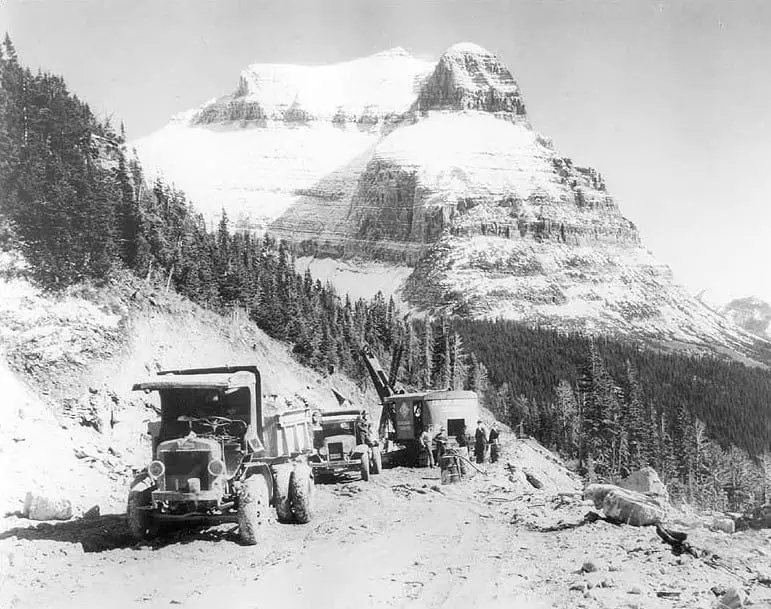
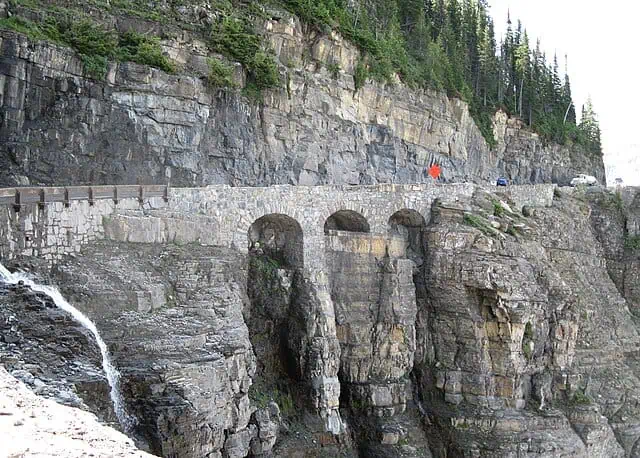
The road stands out as a remarkable engineering achievement of the early 20th century. Roughly twelve miles of it were painstakingly carved into steep mountainsides, relying largely on manual labor with minimal powered equipment.
It also holds historical significance as the first project completed under a 1925 cooperative agreement between the National Park Service and the Bureau of Public Roads. Going-to-the-Sun Road set a groundbreaking precedent for the National Park System, demonstrating the principles of successfully integrating man-made features into the natural landscape.
Completed in 1932, it’s a National Historic Place, National Historic Landmark and Historic Civil Engineering Landmark.
Watch Cheryl Schoss of We’re in the Rockies discuss her experience of driving Going-to-the-Sun Road
The Crown of the Continent
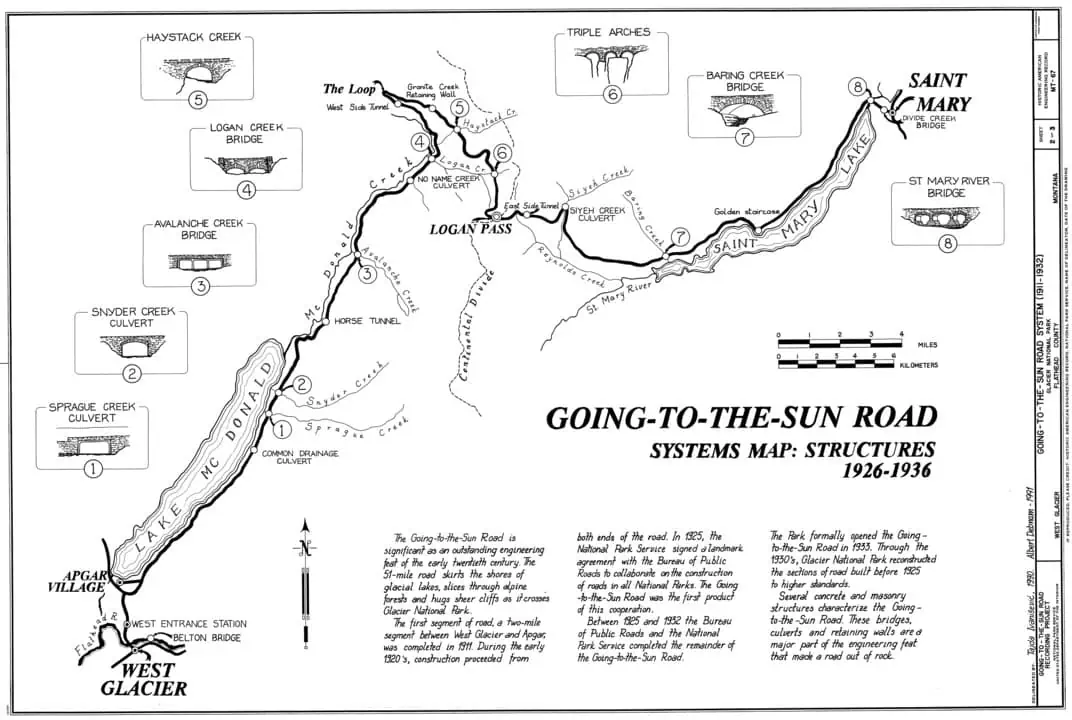
Driving it today, you’ll understand why it’s so famous. Starting near West Glacier, the road winds along the shores of Lake McDonald, a serene, glacially carved lake perfect for a quick paddle or picnic. You’ll weave through forests and as you climb, the views just get better. Think roaring waterfalls, steep cliffs, and sweeping valleys.
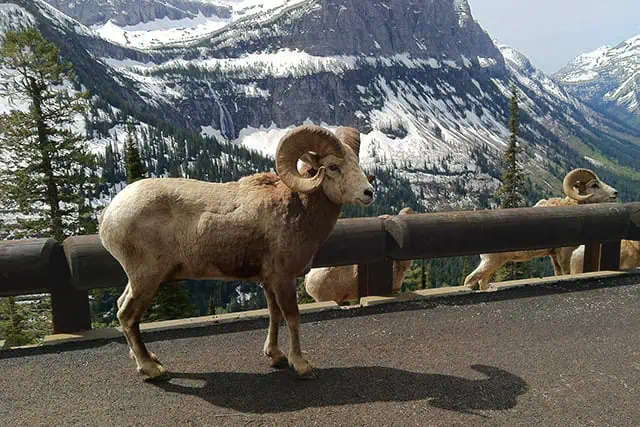
At the top, you’ll cross the Continental Divide at Logan Pass. At an elevation of 6,646′, it’s the crown jewel of the trip and the Crown of the Continent. Stop, stretch, and take in the subalpine meadows dotted with wildflowers. It’s also a great spot for a short hike, like the Hidden Lake Overlook or the start of the Highline Trail. Keep your eyes peeled for wildlife including mountain goats, bighorn sheep and bears.
On the eastern descent, St. Mary Lake steals the show. Its striking turquoise water is almost surreal, especially with Wild Goose Island sitting like a postcard-perfect centerpiece. You’ll also pass views that make you want to stop every five minutes, so leave plenty of time for photos.
Now, let’s talk logistics. Driving Going-to-the-Sun Road isn’t as simple as showing up and hitting the gas. The lower elevations are open and accessible year round, but the alpine portion is only open in the summer. Each year, anticipation builds as people try to guess the opening date of Logan Pass, a rite of spring shaped by snowpack and the challenges of high-altitude plowing.
The window for driving the length of it is generally mid June through the end of September. And since it’s so popular—hundreds of thousands of visitors drive it every year—Glacier has in the past required timed-entry reservation during peak summer months.
Planning to drive Going-to-the-Sun Road between June and September? In 2026, Glacier National Park will launch a pilot, ticketed-only shuttle on Going-to-the-Sun Road, including early morning express trips to Logan Pass. Beginning July 1 (weather permitting), parking at Logan Pass will be limited to three hours to improve access and turnover. The good news: no vehicle reservations will be required anywhere in the park. The updates are designed to ease congestion and help more visitors enjoy the park’s spectacular scenery.
To help you get started planning your trip to Glacier, Parks Channel creators have lots of tips on where to go, what to pack, where to eat, where to stay, and what to do if you see a bear. Which you will. It’s Glacier.
Top photo of Going to the Sun Road in Glacier National Park by the National Park Service