


From fumaroles to forests, Marko Bajzer transforms America's national park soundscapes into orchestral music.
Marko Bajzer is one of the most unusual composers in classical music. He visits America’s national parks and turns what he finds there into orchestral compositions. The Croatian-American composer, bassoonist and educator has been Artist-in-Residence at Lassen Volcanic, Great Basin, Voyageurs and Joshua Tree National Parks, and his ambitious series From Sea to Shining Sea has been heard by audiences across the country. Here he shares his story, his process, and what it sounds like when a fumarole meets a full orchestra.
What was your first national park experience?
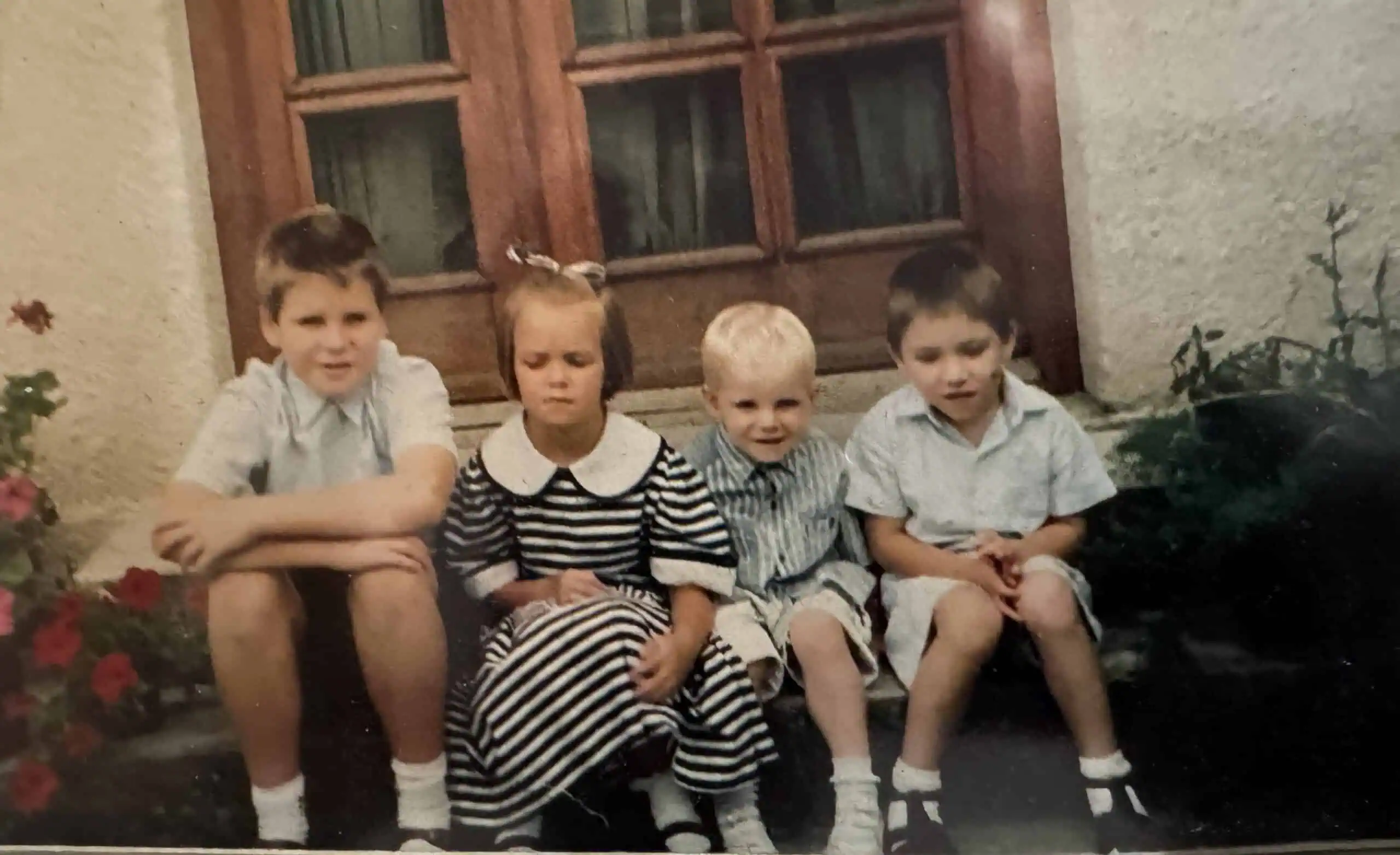
My parents immigrated from Croatia in the mid-’80s, so growing up we didn’t spend a ton of time exploring the US. We went to Yellowstone when I was 3, Mesa Verde and the Great Sand Dunes when I was about 10.
It wasn’t really until 2017 that I fell in love with the outdoors, when I had to drive alone from Omaha to Washington D.C. to San Francisco to pick up my mom’s old car. I stopped at several national parks and was just blown away by the sense of space, freedom, and nature. It made me realize how little in our day-to-day lives we experience silence, darkness, and solitude, all of which are conducive to introspection and growth. It was really life-changing. When I got back to California I immediately researched what national parks there were in the state, and of course was delighted to learn that we had more than any other state.
A big part of that road trip was listening to music. For example, I’d choose a piece meant to depict a sunrise while watching an epic sunrise at Canyonlands. When I got home I began assembling a database of classical music about nature and exploring the parks with that music as a soundtrack. At some point I learned that some national parks had Artist-in-Residence programs, so I came up with the idea to write a series of orchestral works, each telling the story of a different national park. Orchestras can choose to perform just one as a standalone piece, combine a few into a short suite, or perform all of them. I’m hoping for about ten total.
You grew up surrounded by music. How did you find your way to composition and eventually to the national parks?
I’ve been involved in music for pretty much my entire life. I watched The Sound of Music on a daily basis when I was 3, switched to Fantasia when I was 4, started piano in first grade, and eventually got into singing, then trombone in band. In ninth grade I picked up the bassoon, which is my main instrument today.
I started college as a bassoon performance major, but quickly found that composing was what I found most musically rewarding. After my undergraduate degree in composition, bassoon performance, and music education, I moved to San Francisco in 2013 to pursue my Master’s in Music Composition.
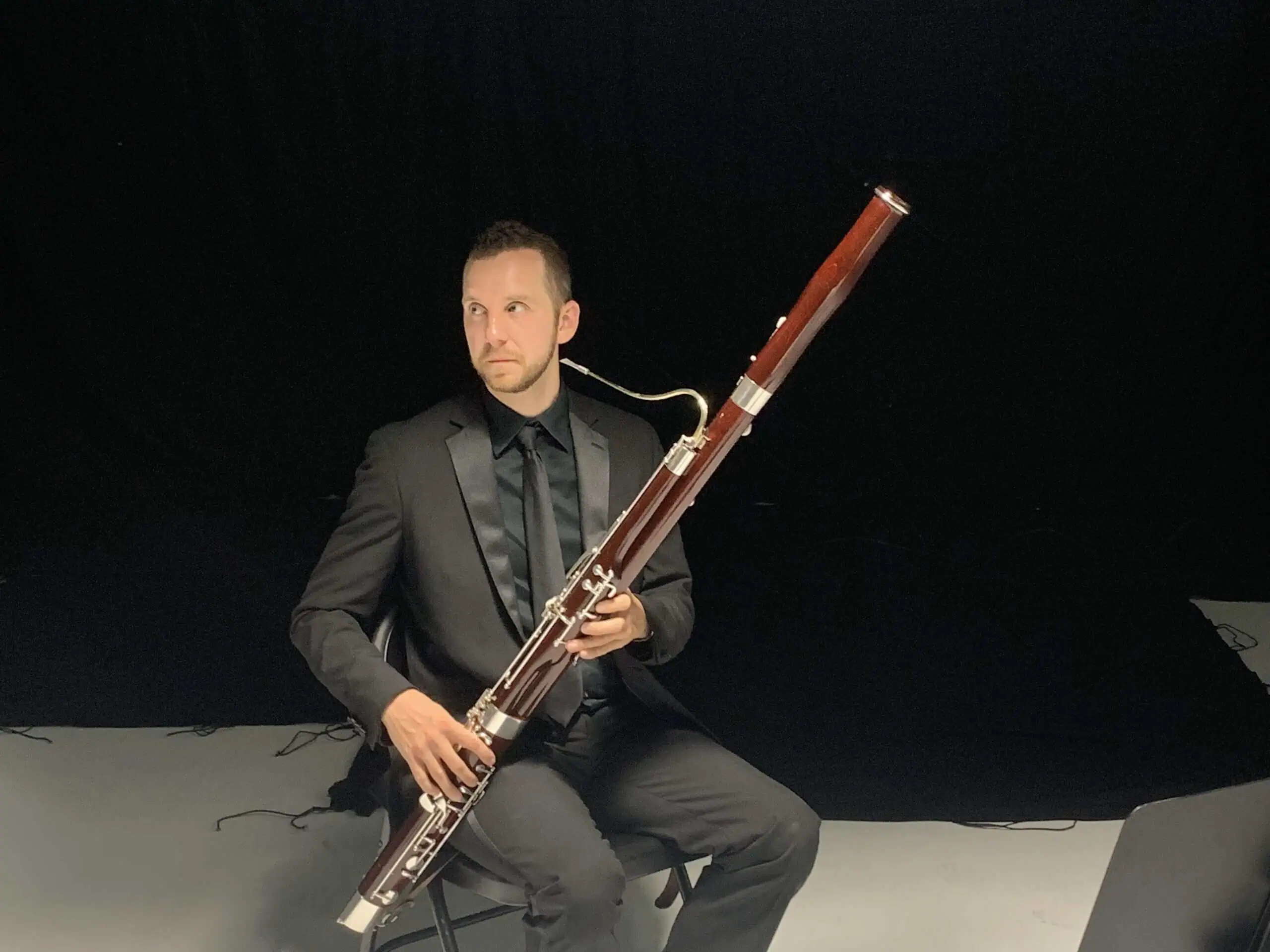
Since then I’ve done a lot of different things: playing bassoon in orchestras around the Bay Area, teaching students from preschoolers through graduate students; running a performing arts nonprofit for about five years; a stint as a painter and sculptor during the pandemic; designing a deck of national park-themed playing cards now sold in gift shops across the country; and working as a wilderness guide in the US and Europe. More recently, my career is taking a definite turn toward composition, particularly relating to the national parks.
You’ve been Artist-in-Residence at four national parks so far: Lassen Volcanic, Great Basin, Voyageurs, and Joshua Tree. How do you choose which parks to feature, and what does your time as Artist-in-Residence actually look like?
The parks I’m really interested in are the ones with a unique soundscape I can record and use to tell the story. Some parks are truly amazing but don’t necessarily have a unique soundscape. That’s a real factor in the selection process.
Lassen Volcanic has hissing fumaroles and bubbling mudpots, and I was able to get eruption sounds from other volcanoes around the world. Those are unique sounds that I can use to tell a story.
View this post on Instagram
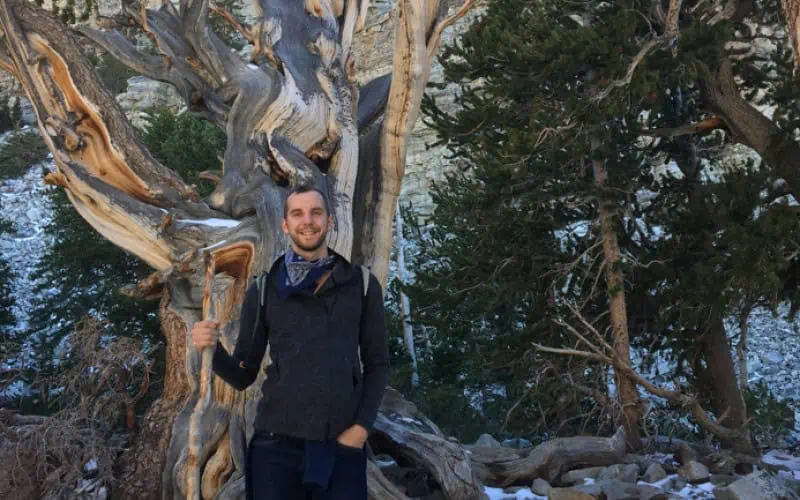
Voyageurs gave me the rhythmic sound of paddling through water, waves against the canoe, loon calls, wolf howls, mosquitoes buzzing for my piece Sky Tinted Water. For Great Basin and The Sacrifice of Prometheus, I connected electrodes to the ancient bristlecone pines, some of the oldest trees in the world, and collected musical biodata from the trees themselves, which became the basis for most of the melodies and motives in that piece. Each of those sounds gets assigned to a key on my keyboard, and I, or someone else, play along with the orchestra.
As for the residencies themselves, I typically spend four to six weeks in the park, spending my days exploring and gathering audio recordings and footage. I try to find the most rugged and remote corners, places where people don’t typically go, and just see what’s up.
I plan meticulously beforehand, poring over topographic maps, reading trip reports, flying around on Google Earth and 3D models of the terrain, assembling lists of places I want to see. The key is having a plan (because the research is so important), but not being married to it and being open to what the universe throws at you. Even after a month or more of hiking, backpacking, and canoeing, I never end up having time to see everything I want to.
I don’t actually bring my bassoon or do much composing in the park. I’m usually so busy with exploring the park, doing presentations in the park for the public, and meeting with local orchestras, that it doesn’t leave much time for composing when I’m there. I can write at home, but I can’t experience Voyageurs unless I’m at Voyageurs. And these pieces take six to eighteen months to write, so I wouldn’t get very far in a few weeks anyway. My goal for the residency is to develop a plan in my head for how the piece will go so that when I get home, I can get right to it.
You’ve had some remarkable premieres, including what you believe was the first piece ever scored for solo bass oboe and full orchestra. Tell us about the highlights.
Each performance is special in a different way. With Lassen Awakes, it was a proof of concept, I was proving to myself I could do this.
The Sacrifice of Prometheus, performed by the Reno Philharmonic, revolved around the story of Prometheus, a 5,000-year-old bristlecone pine that was the oldest known living non-clonal tree in the world before it was inadvertently cut down in the 1960s. The spirit of Prometheus is a character in the piece, played by the bass oboe, a pretty rare instrument. That was also the first orchestral work to use biodata from plants, to my knowledge, and the first piece performed in the US scored for solo bass oboe and full orchestra. Being the “first” to do something in an art form that’s centuries old is a pretty cool feeling. I’m really proud of it.
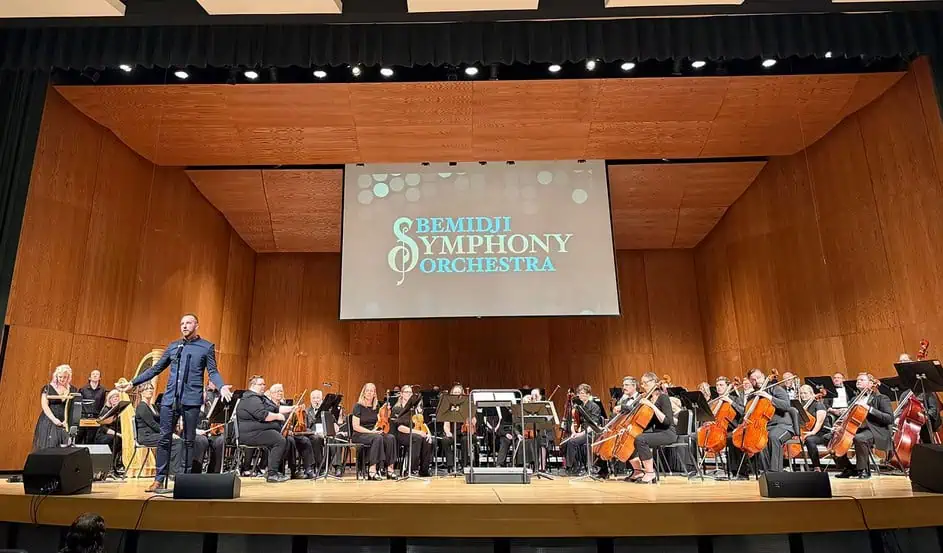
When the Rochester Symphony, based in my hometown, performed Sky-Tinted Water, my kindergarten teacher was there. My middle school and high school band directors were there. Musicians, coaches, teachers, carpool buddies, people who had contributed to my life were there. It felt like a full-circle moment, and a chance to thank them for everything, twenty years later.
The audience response has been extraordinary across the board. With the Lassen premiere, the concert drew about 200 more tickets than the North State Symphony’s seasonal average. The Reno Phil concert became their highest-grossing subscription concert in the history of their orchestra. Rochester sold out. People approach me at intermission to tell me about how their parents took them to these parks when they were kids, or how they took their own kids, how they felt transported back. Writing classical music about nature is nothing new, but most of the composers orchestras play are European, so most of the nature they write about is European: Strauss’s Alpine Symphony, Respighi’s Pines of Rome, Smetana’s Moldau, Beethoven’s Pastoral. It hits differently when the music is about northeast California, east-central Nevada, northern Minnesota.
Each piece is a three-to-six-year process, and it’s not until the very end that you get any artistic payoff. Orchestras don’t typically start rehearsing until the week before the concert. It’s an almost masochistic exercise in delayed gratification.
What’s the ultimate vision for the series?
The full series will be about seventy-five minutes of music, which is a significant undertaking for any orchestra, so the flexibility is intentional. Orchestras can program one piece, a few, or the whole thing.
Within the ten pieces, there will also be mini-suites. Voyageurs, Glacier Bay, and a future piece about Acadia (wind, waves, and shore) form a water suite. Joshua Tree, Redwood, and Great Basin create a plant suite. Joshua Tree, White Sands, and Death Valley become a desert suite. I’m especially drawn to the desert. Growing up in Minnesota, I always thought of it as a barren wasteland, and visiting it was a revelation. The vast, epic landscapes of places like Death Valley scratch an itch I never knew I had.
My ultimate vision is that this becomes a standard work of twenty-first century orchestral literature, something orchestras perform long after I’m dead, that inspires people to enjoy and protect these places for centuries to come.
Interested in creating art in a national park? The National Park Service offers Artist-in-Residence programs at more than 50 parks across the country. Find out more at nps.gov.